The Passenger Hand: Why Your Trailing Grip Is Sabotaging Take-Off
Most pop problems at a UK cable park get blamed on the board, the speed, the kicker or the phase of the moon. The trailing hand rarely gets a mention. That is a shame, because the hand at the back of the handle is often the quiet reason a take-off feels flat, rushed or weirdly off-axis. It is not that you need to let go. You need to stop letting it drive.
What the trailing hand is actually for
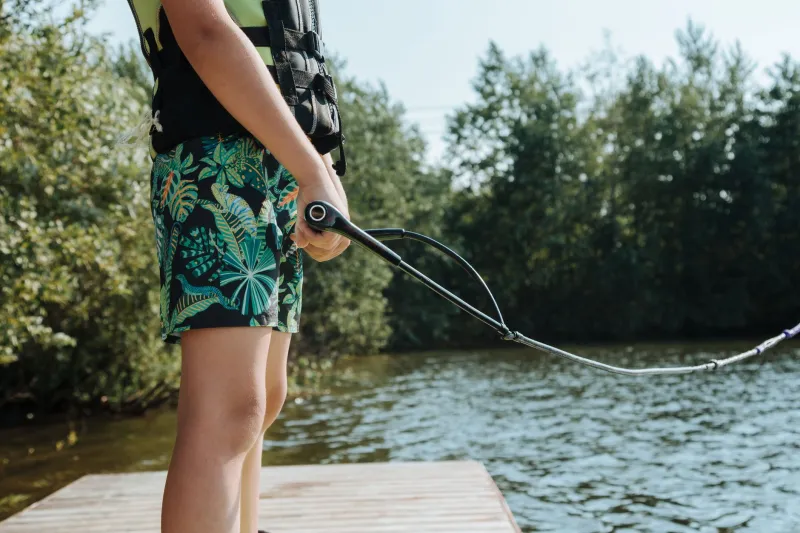
On a wakeboard, the front hand does most of the steering. It sets handle height, controls line tension and helps keep the handle close to your front hip as you load the edge. The trailing hand is there to support that, keep the handle stable and help you stay connected through the pop. It is a passenger, not the pilot.
The trouble starts when the back hand takes over. If it white-knuckles the handle, pulls it towards your rear hip or locks your elbow, your shoulders turn early. Your board flattens. The edge that was going to release you upwards instead leaks away sideways. You feel like you are pulling for pop, but you are really just pulling yourself out of shape.
This is especially common for beginners and early intermediate riders who have just started hitting kickers. The instinct is to grip harder as the take-off gets closer. In reality, the opposite is usually required: a calm front hand, a soft rear elbow and a handle that stays near the front of your stance rather than drifting behind you.
A two-minute self-diagnosis on flat water
Before you spend a whole set wondering why the kicker feels different, test the grip on a clear straight line. Keep it simple and stay away from the obstacles for a lap.
First, notice where the handle sits. If it keeps sliding towards your back pocket, your trailing hand is probably doing too much. If your rear forearm is pumped before you have even reached the kicker, that is another clue.
Second, try a lighter rear grip for a few seconds. Keep your fingers on the handle, but let the front hand carry the load. You are not letting go. You are just reducing pressure. Does the board track more cleanly? Do your shoulders feel squarer? Does the handle stay closer to your front hip? If yes, you have found the issue.
Third, get someone to film one pass from the side. A phone at the dock is enough. Watch it back in slow motion and look for three things: a locked rear elbow, the handle drifting behind your hip, and your chest turning away from the direction of travel before take-off. Those three frames tell you more than a dozen guesses.
Three fixes to test on your next cable set
You do not need a complete grip rebuild. Pick one of these per set and give it your full attention. If the water is cold and your hands are stiff, keep the reps short and the effort controlled.
1. The two-finger passenger lap
For your first two laps, hold the handle with your front hand as normal and let the trailing hand use only the thumb and first two fingers. Keep the other fingers open. Stay on flat water and ride at a comfortable pace.
The aim is not to look stylish. The aim is to feel how little the back hand needs to do. If the handle stays stable and your edge feels quieter, you have proof that your normal grip is over-working. If it feels too sketchy, keep a full grip but deliberately reduce the pressure. The drill is about awareness, not heroics.
2. The soft-elbow count
On your kicker approaches, count yourself through the last few metres: edge, edge, stand. During the two edge counts, keep your rear elbow soft and your trailing hand light. On stand, extend your legs and let the pop happen. Do not yank the handle towards your back hip at the last second.
A useful cue is that pop is a standing movement, not a pulling movement. The front hand keeps the handle close. The legs extend. The trailing hand just comes along for the ride. Run three controlled passes at around seventy per cent effort rather than one all-or-nothing attempt.
3. The front-hip marker
Pick a simple mental marker: the handle should stay near your front hip, not drift towards your rear pocket. Before each approach, check that your front hand is setting the height and your back hand is not dragging the handle across your body. If you feel it slipping behind you, soften the rear grip and re-set the front hand before you load the edge.
This one is easy to test because you can feel it immediately. It also pairs well with filming. Once you know what the correct handle position feels like, you can spot the drift before it ruins the take-off.
When to film it or ask a coach
If you have tried the lighter grip for a couple of sets and the take-off still feels off, get a second pair of eyes. Film from the side, ideally at the start dock or from the bank near the kicker. Ask a coach to watch your grip specifically, not just the jump. A good coach will spot within a few passes whether your trailing hand is pulling the handle away from the line you need.
Ask for help sooner if you notice rear-hand calluses, forearm pump, a handle that constantly ends up behind your hip, or a shoulder position that opens before you leave the water. Those are not just style points. They are signs that your back hand is taking over.
Your trailing hand is not the enemy. It just needs a smaller job. On your next cable set, give the front hand the controls and let the back hand be a passenger. The pop you have been chasing might have been there all along, waiting for you to stop gripping it away.