Empty Water, Sharp Edges: Why the Quiet End of the Cable Day Beats a Saturday Queue
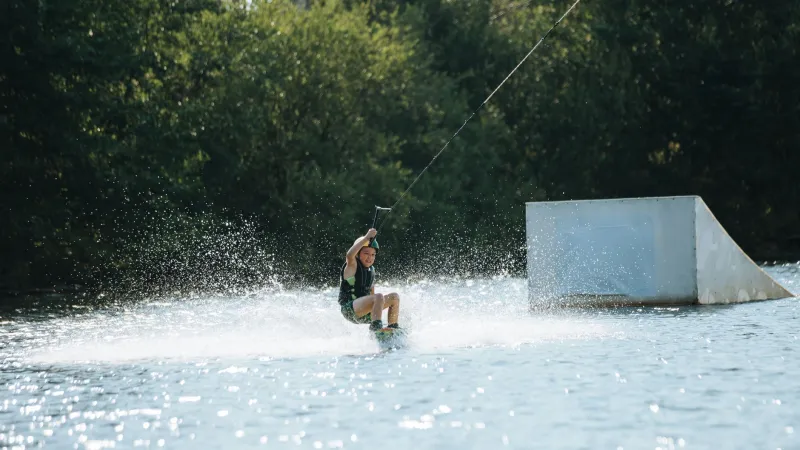
There's a particular sound at a UK cable park on a sunny Saturday in July: twenty-odd boards clattering in the holding bay, someone's dad shouting encouragement, and the constant whirr of the cable doing its rounds. It's a great atmosphere. It is also, if you're trying to learn anything, mildly chaotic.
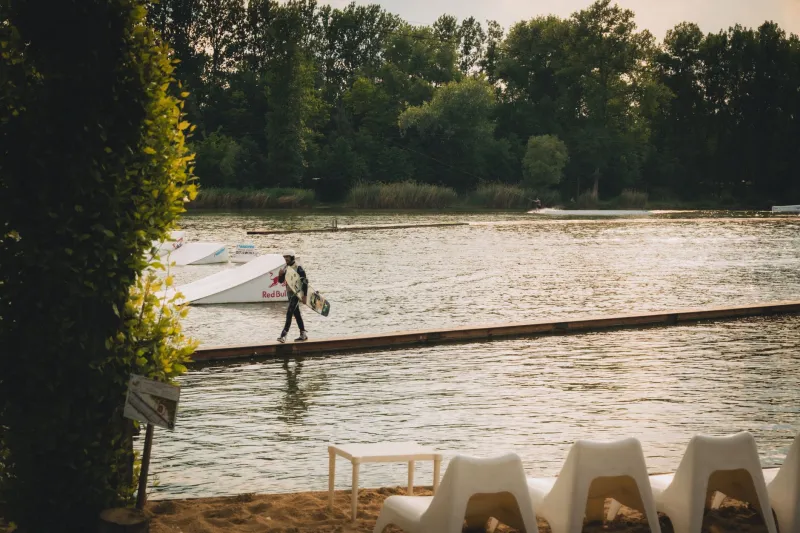
Now picture the same lake on a Tuesday at 7am. Mist sitting on the water, a couple of swans, one coach, and you. The cable still turns. The kickers are still there. Nothing else is.
That contrast is the whole argument of this piece. If you're in the Beginner Decisions phase or grinding through the middle of Rider Progression, the time you book matters almost as much as what you practise.
What a quiet lake actually changes
Off-peak isn't just about shorter queues, though that helps. It changes three things that directly affect how fast you improve.
The water stays clean. Cable lakes get chopped up by riders, not by wind. By 11am on a busy day you're riding through a washing machine of other people's wakes, and a chopped surface makes edge control feel vague and unpredictable. Early morning or late evening water is glassy, which means your board tells you the truth about what your edge is doing. If you're working on a progressive edge into the wake or trying to hold a carve without skidding, you want the truthful version.
You get more passes per hour. A busy session can mean a long wait between laps, and long waits cool you down, both physically and mentally. Fewer riders means more repetitions, and repetitions are the only currency that buys progression.
The coach can actually see you. Instructors at a crowded park are doing triage — spotting the person about to land on their head, keeping the queue moving, answering questions at the dock. In a quiet session, you get eyes on your approach, your pop, your landing, and a proper conversation afterwards. That single cue you've been missing often appears in the first five minutes of a low-crowd set.
Peak versus off-peak, honestly
Peak sessions have real advantages: more buzz, more people to learn from, and often the only slots that fit around a full-time job or a family. A busy Saturday can be a brilliant social occasion. It's just not the best classroom.
Off-peak sessions are quieter, cheaper at many parks, and far more productive per minute on the water. The trade-off is logistics — earlier alarms, darker drives, sometimes a lake that only opens the cable for a handful of riders.
A rough way to think about it: peak time is for riding, off-peak is for learning. If you're still building the foundations, weight your season towards the quiet hours and treat the busy sessions as a bonus.
Finding the quiet slots at your park
Opening hours vary wildly across the UK, so start with a phone call or a look at the park's booking page rather than assuming. A few patterns are worth hunting for:
- The first hour. Whatever time the cable opens, the first 60–90 minutes are usually the calmest. Some parks run early-morning slots in summer; a few will open for a pre-work set if there's demand.
- The last two hours. Twilight sets are criminally underused. Light gets flat, the air cools, the crowds go home for dinner, and the water goes glassy again.
- Midweek daytime in term time. If you can wangle a day off or work flexibly, a Wednesday in late September is a different sport to a Saturday in August.
- Grey, drizzly days. British weather is your ally here. A bit of drizzle empties a booking sheet faster than anything, and a wet cable session is not actually less fun than a dry one.
Plan around the drive, not just the water
Half the value of an off-peak slot is destroyed by a grim commute. A 6am departure that avoids the school run, the motorway crawl and the roadworks is worth more than a marginally cheaper pass. If your nearest park is an hour away, work out which direction the traffic flows at which hour and build the session around that, not the other way round.
Also check the wind forecast. A strong onshore wind can make one end of a lake uncomfortable while the other stays sheltered, and some parks will run a shorter cable or shut a kicker in gusty conditions. A quiet lake is only useful if it's rideable.
Passes, memberships and the cost question
Most UK parks price off-peak sessions below peak rates, and several offer multi-buy bundles, flexi passes or season memberships that only make sense if you're riding regularly. Do the arithmetic on your realistic session count, not your optimistic one. Ten sessions bought in a bundle you never use is more expensive than three peak sessions you actually attend.
If you're new, a taster session or a couple of coached sets will tell you more than any membership page. Once you know you're hooked, off-peak bundles tend to be where the value sits.
The low-crowd checklist
- Book the night before, after checking wind and rain. Don't lock in a week early during a British autumn.
- Arrive 30 minutes before your slot. Walk the lake, watch the cable, note which features are running.
- Warm up on land. Ten minutes of mobility beats ten minutes of wobbling on your first lap.
- Pick one focus for the session. One. Not three.
- Ask the coach for a single cue early. Then ride with it for the whole set.
- Do the scary thing while the water is still empty. New trick first, comfort trick later.
- Film a couple of passes. Quiet sessions are the easiest to film without a stranger's elbow in frame.
- Stop before you're knackered. Fatigue teaches bad habits faster than a coach can correct them.
When the crowd is the point
None of this is a reason to avoid busy sessions forever. Clinics, competitions, mates' birthdays and the simple pleasure of a buzzing lake all have their place. But if your jump has been stuck in the same shape for a season, the fix might not be another technique video. It might be an alarm set for an hour you'd rather not see, a flask of coffee, and a lake with nobody on it.
Book the quiet end of the day. Your edge will thank you.