Book, Buy, Ride: How to Plan Your 2026 UK Wakeboard Season Without Wasting Sessions
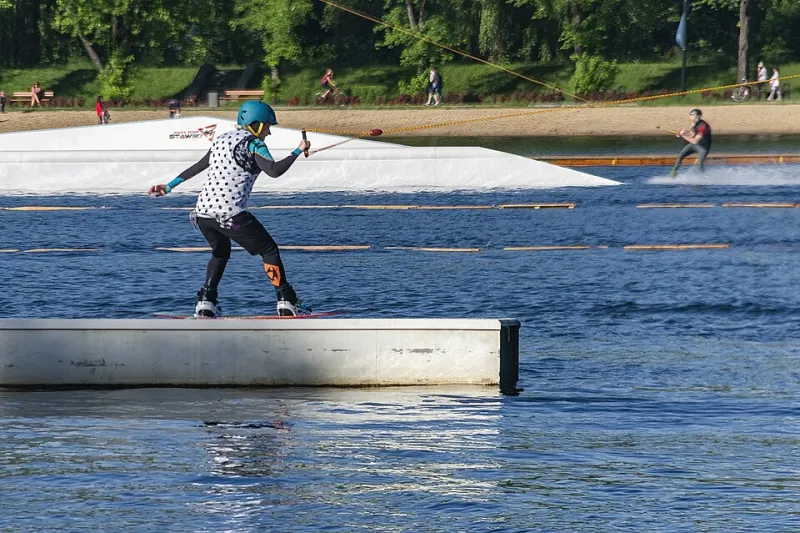
Photo: Krzysztof Popławski, CC BY-SA 4.0, via Wikimedia Commons
Every UK rider eventually learns the same lesson: the best session of the year is rarely in July. It's usually a quiet Tuesday in late May or a bright Saturday at the end of September, when the water is still warm enough to enjoy and the queue behind the dock has evaporated.
If you're planning your 2026 season from scratch — first lessons, first wetsuit, maybe first board — this is the rough map we'd hand you. It's not gospel, because British weather enjoys a plot twist, but the patterns hold up year after year.
Start with water, not air
This is the single most useful thing a beginner can know: UK water temperature lags the air temperature by roughly six weeks.
A gorgeous sunny April day can still mean 9°C water. A grim-looking late October afternoon often has water that's warmer than the air above it. Air temperature decides whether you enjoy the walk to the dock. Water temperature decides whether you enjoy the set.
Rough figures for a typical year:
- January to March: 4–8°C
- April to early June: 9–15°C, rising fast
- Late June to early September: 16–20°C
- Late September to November: falling from 16°C back towards single figures
Plan around those numbers and you'll make better decisions than half the people in the car park.
January to March: the planning months
Cold, quiet, and honestly the best time to sort your admin.
- Book your spring lessons now. Coaching slots at UK cable parks fill up quickly once the clocks change, and the good coaches go first. Booking in January for an April start is not excessive — it's sensible.
- Buy the wetsuit, not the board. If you're committing to a season, a properly fitted suit is the purchase that keeps you riding. Try it on in person if you possibly can; fit matters far more than brand.
- Hold off on hardware. Buying a board before you've had three or four lessons is how people end up with something they outgrow in a month — or something they never feel comfortable on. Rent first. Learn what you like.
- Get the boring kit sorted: helmet, impact vest, gloves if you feel the cold, a decent towel and a dry robe for the car park. Small comforts keep you coming back.
April and May: the smartest six weeks of the year
If you can only pick one window for your first block of lessons, pick this one.
Water is climbing into the low teens, which is perfectly workable in a 4/3 or 5/4 wetsuit with boots and a hood on the colder days. Parks are still relatively quiet. Coaches have diary space. You'll get more laps, more feedback and more attempts per hour than at any other point in the season.
This is also the kindest time to be a beginner. Fewer people watching, fewer people waiting, less pressure to be good. Progress comes faster when you're not queuing.
June to August: great for fun, awkward for learning
Peak season. Warm water, long evenings, everyone's keen.
It's brilliant for holidays, social riding and building confidence in the sun. It is less brilliant for learning something new, because the busiest parks mean shorter sets and longer waits, and the progression you get from a hundred rushed laps is not the same as the progression you get from thirty focused ones.
Two practical workarounds:
- Ride off-peak. Weekday evenings after work, early weekend mornings, anything before 10am. The difference in lap count is enormous.
- Don't schedule your first wake jumps for a packed August Saturday. Wait for a quieter slot and give yourself room to fail repeatedly, which is exactly what learning a jump involves.
September and October: the quiet progression window
Here's the underrated part of the UK season. Water holds heat well into September, often still 15–17°C on the nicer days, and the parks empty out the moment the schools go back.
For improvers chasing clean wake jumps, this is arguably the best six weeks of the year: warm enough, quiet enough, and coaches suddenly have flexible diaries. If you've been stuck at the same plateau all summer, book a block here and you'll likely break it.
It's also when end-of-season sales start appearing. Boards, bindings and last-season wetsuits all get cheaper from late September into November. If you've been renting all summer and now know what you want, this is your moment — buy with actual knowledge rather than guesswork.
November and December: small wins, short sets
Water drops into single figures and the hardcore emerge. A good 5/4 with a hood, boots and gloves will get most people through; a drysuit is the upgrade that makes winter genuinely enjoyable rather than merely survivable.
Adjust expectations accordingly. Winter sessions are for maintenance and technique, not for trying to learn a new trick in forty minutes of shivering. Short sets, warm car, flask of tea. Focus on handle position and edge control rather than heroics.
A handful of UK cable parks run through the winter, and if you can find one reasonably close, a monthly session keeps your feel for the water alive so that April doesn't feel like starting over.
The booking timeline, condensed
- January: book spring lessons, sort your wetsuit, get kit ready
- March: confirm summer slots if you want weekend riding in peak season
- May: best value block for beginners — commit now
- July: ride early or late to dodge the queues
- Late September: book an improver block to break your plateau
- October–November: buy gear in the sales, once you know what suits you
- December: one or two short, cold, cheerful sessions to stay sharp
The buying order that saves you money
Wetsuit first, fitted properly. Then helmet and impact vest. Then boots, because fit is everything and you should try them on. Then the board — ideally after a season of renting, when you can actually describe what you want instead of repeating what a forum told you three years ago.
One last thing
Don't try to ride the whole year at full intensity. British wakeboarding rewards a bit of rhythm: heavy in spring and autumn, sociable in summer, deliberate in winter. Plan for that and the sessions you do get will be the ones that actually move you forward.