Rope or Wake? Picking Your First UK Wakeboarding Home Without Wasting a Season
Every UK beginner hits the same fork in the road, usually about three weeks after their first pull. Do you commit to the cable park down the road, or do you find someone with a boat and a spare seat? The internet is unhelpfully diplomatic about this. It should not be. The two environments teach different things, cost different amounts and suit different personalities.
The blunt answer, for most people
If you are starting from scratch in 2026, with no boat-owning mate and a budget that has to stretch, go to a cable park first. It is cheaper per pull, easier to book, and you will get far more repetitions in an hour than you will behind a boat. The boat is the better teacher for some things, but it is rarely the better first step.
What it actually costs
A cable session with kit hire typically lands somewhere between £25 and £45, depending on the venue and the time of day. Multi-buy passes, memberships and off-peak slots bring that down significantly for regulars, and coaching is usually a small add-on rather than a separate purchase.
A boat hour can run from £60 to well over £120, and you will want to split it three or four ways for it to make sense. Add fuel, travel and the fact that many boat clubs charge membership before you have even touched the water. Per minute of actual riding, the boat is almost always the more expensive option — and that is before you factor in the wetsuit you will inevitably buy.
Repetition versus the perfect wake
The cable gives you relentless repetition. You fall, you get back up, you go again. There is no waiting for a boat to turn around, no downtime while someone else takes a set, and no wasted afternoon. That volume is exactly what a beginner needs.
It also does not stop. The pull keeps coming, the corners arrive quickly, and other riders are always somewhere nearby. For some people that is exhilarating. For others it is a lot of pressure in the first ten minutes.
The boat gives you a shaped wake, a spotter and time to breathe between sets. The feedback is calmer and the environment is private. But a three-hour trip might yield twenty minutes of water time, and you will spend a fair chunk of it watching someone else ride.
Who is teaching you, and how
Cable coaching tends to happen from the bank, with hand signals, video review and quick corrections between laps. It is efficient and cheap, and good coaches can spot a problem from fifty metres away.
Boat coaching happens in the boat, in real time, with an instructor who can see exactly what your edge is doing and tell you before the next attempt. The feedback is richer, but you are paying for it by the minute.
Neither is better. One suits riders who learn by doing, the other suits riders who want to understand why.
The progression path to wake jumps
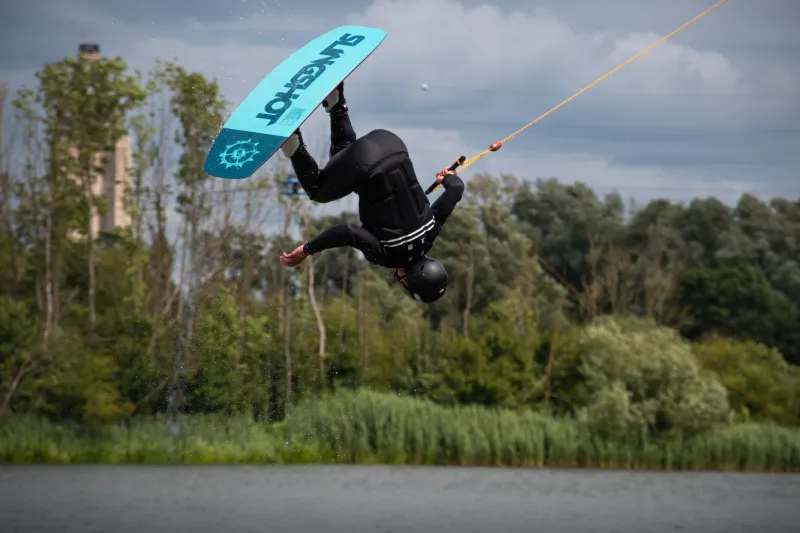
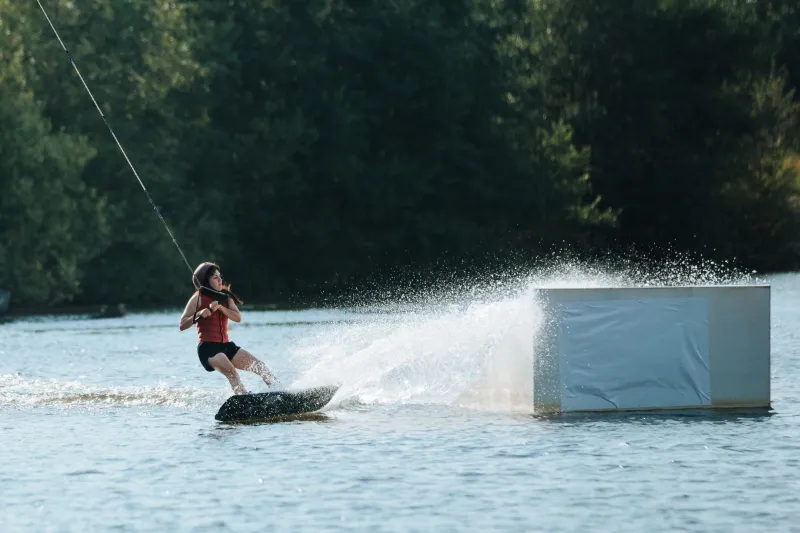
On a cable, your first wake jumps will likely come off a kicker or a small ramp, and they demand solid line tension, a reliable ollie and the confidence to commit. Behind a boat, you are learning to edge up the wake, stand tall and take the pop — a different skill with a different feel underfoot.
The mistake is treating them as the same trick. They are not. Riders who learn both become more adaptable, but beginners should pick one environment and get comfortable before swapping.
Crowds, confidence and the British weather
Cable parks are social, busy at weekends, and occasionally intimidating when a queue is watching you fail. That pressure is useful for some and paralysing for others. Boats are private and calm, but you cannot hide from the same three people for an entire afternoon.
Weather matters too. Many UK cable parks cut hours or shut over winter, while boat clubs often go quiet from November. If year-round riding matters to you, check what stays open before you commit to either.
A simple decision framework
- No boat access, tight budget, want lots of reps: cable park.
- Access to a boat or a club, want to learn wake-to-wake jumps properly, prefer privacy: boat.
- Not sure yet: book one coached cable session and one boat taster, then decide.
- Want both: cable for volume, boat for wake-specific work.
Where I would start
Book a beginner cable session with coaching. Learn to stand up, hold an edge and ride switch without thinking about it. Then, once you can ride comfortably, spend a day behind a boat. You will appreciate the wake far more when you are not learning to stand up at the same time.