The Bit Nobody Practises: Cable Return-Leg Drills That Compound
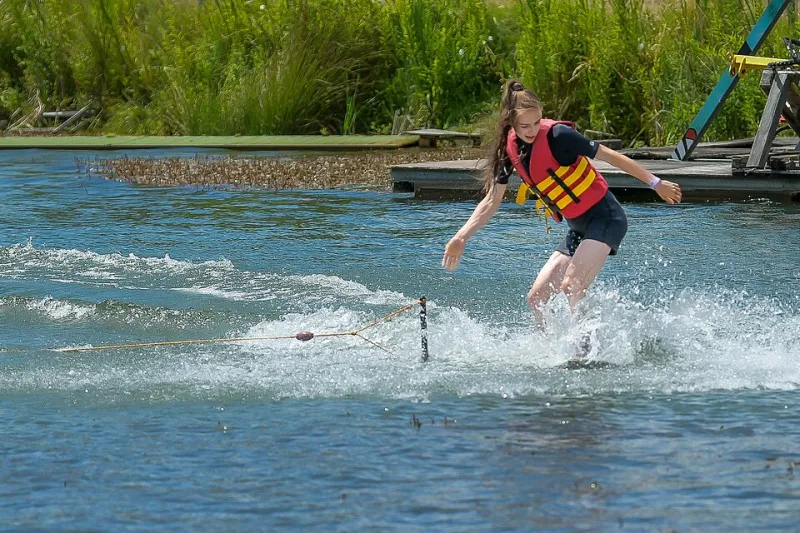
Photo: U.S. Air Force photo by Airman 1st Class Jordan Gonzalez, Public domain, via Wikimedia Commons
Ask a group of cable riders what they worked on during their last lap and most will describe the feature. The kicker, the box, the corner they nearly made. Very few mention the stretch after the obstacle, when the board is back on the water, the line is steady and nothing dramatic is happening.
That quiet half of the lap is where a lot of progress hides. It is also where bad habits settle in. If you spend the return leg coasting on a flat board with your arms out and your mind already in the queue, you are rehearsing exactly that. The good news is that the fix costs no extra laps. You just need a plan for the bit nobody practises.
Why the return leg gets ignored
Cable parks are built around features. The kicker draws the eye, the box draws a crowd, and the dock draws everyone back for another go. The return leg feels like transport: a chance to shake out the arms and get your breath back before the next hit. On a busy Saturday in the UK, it can also feel like the only calm bit of the session, which is exactly why it is useful. You do not need much space, speed or courage to practise there. You need attention.
Drill one: count your edge
Pick one return leg and ride it on a single edge. Count slowly in your head — one, two, three, four — while holding a consistent heel edge. Then change to the toe edge and count again. The aim is not to carve hard or spray water at anyone. The aim is to feel the board stay locked while your upper body stays quiet. If the count keeps resetting because you lose the edge, you have found something to work on. This drill is especially useful after a feature where you landed slightly back-footed or rushed. It gives you a neutral, controlled rep before the next obstacle.
Drill two: put the handle where it belongs
A lot of take-off problems start on the return leg. Riders let the handle drift high and away from the body, then wonder why the line feels loose when they load for a jump. On the way back, bring the handle to hip height and keep it close enough that your arms stay soft. Check that both hands are doing a job. The trailing hand should not be hanging in space like a passenger. Hold the position for a few seconds, relax, then reset. You are teaching your body what a quiet handle looks like before the next feature arrives.
Drill three: breathe on a rhythm
Cable riding makes people hold their breath. It happens on the dock, it happens before a jump and it definitely happens after a wipeout. The return leg is a good place to break that pattern. Try breathing in for four counts and out for six. Keep it easy — this is not a breath-hold contest. The longer exhale helps you settle your shoulders and stop gripping the handle like a shopping bag. Do it twice per return leg and you will notice the difference when you next set up for a trick.
Drill four: look past the dock
Your eyes steer you more than you think. On the return leg, practise looking where you want to go rather than at the dock, the queue or the person who just fell in front of you. Pick a point on the far bank and ride towards it with soft eyes. Then shift your gaze to the next feature before you get there. This is visualisation in its simplest form: you are rehearsing the line, not just surviving the tow.
Drill five: rehearse the next trick at walking pace
You do not need to throw the trick on the return leg. You need to feel the setup. If you are working on a wake jump, practise the approach posture: knees soft, handle at hip, chest tall, eyes ahead. If you are working on a surface trick, run through the hand movement and weight shift at low effort. Keep it small and repeatable. The return leg is a rehearsal space, not a performance. Two clean rehearsals are worth more than one rushed attempt.
Keeping it safe when the cable is busy
Return-leg drills should never interfere with other riders. Keep your line predictable, avoid sudden cuts across the cable and do not stop in the middle of the circuit. If the park is packed, choose one drill per lap and keep it small. On a quiet weekday session, you can layer two or three together. In cold weather, use the return leg to check that your hands and shoulders are still relaxed — tension in the cold is a fast route to sloppy edges. And if you are sharing the water with beginners, give them room. A calm return leg is not an excuse to drift into someone else's path.
A simple return-leg routine
For your next UK cable session, try this: one lap of edge counting, one lap of handle position, one lap of breathing, then repeat. Keep each drill to the return stretch only, so your feature riding stays fresh. After the session, note which drill felt awkward. That is usually the one worth repeating next time. The feature gets the glory, but the quiet half of the lap builds the rider. Use it and every cable session starts working twice as hard.