The Borrowed Board Test: Getting the Most From Park Hire Kit
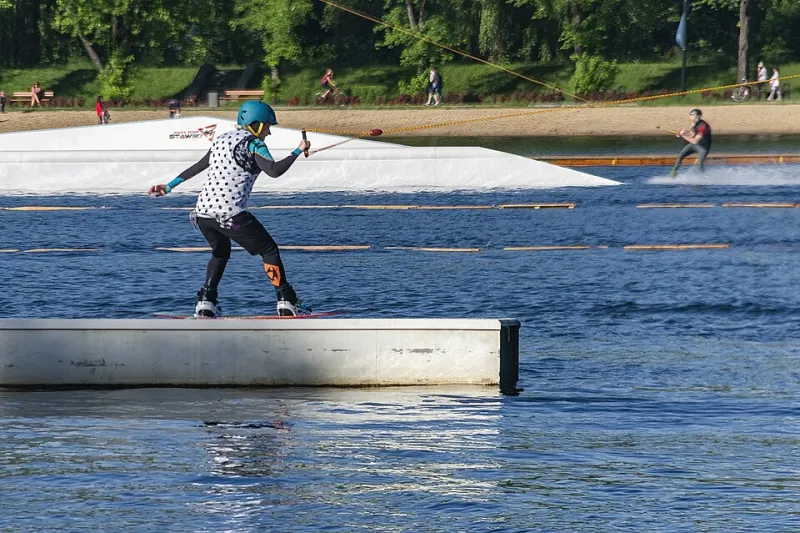
Photo: beginner wakeboard rental equipment at UK cable park, via topludiblog.com
Your first few wakeboard sessions are not the time to spend hundreds of pounds on gear. Hire kit exists for a reason: you do not yet know what you like, what fits and whether you will still be hooked after the third cold-water faceplant. Borrowing is not a compromise. It is a sensible first step.
The catch is that rental equipment is only useful if it fits properly. A board that is too small, bindings that pinch or a wetsuit that balloons at the lower back will make learning harder than it needs to be. Most parks will help you get sorted, but you need to know what to ask.
What hire kit usually includes
At a UK cable park or wake school, a beginner package commonly includes a wakeboard, bindings, a wetsuit, a helmet and an impact vest. Some venues also offer gloves, hoods, boots or a changing robe for an extra fee. Boat schools may include the board and bindings as part of the lesson, with wetsuit hire separate.
Ask what is included before you arrive. There is a difference between a cable pass with kit hire and a lesson with kit included. Also check the deposit, ID requirements and what happens if you damage something. None of that is unusual, but it is better to know at the desk than at the dock.
Board size: weight first, confidence second
Beginner boards are usually longer and wider than advanced boards. That gives you more surface area, more stability and a bit more forgiveness when your edge is not quite there. Do not ask for the smallest board because it looks cooler. Ask for the board that matches your weight and your current level.
Staff will usually have a size chart or a simple recommendation based on your weight. If you are between sizes, lean towards the larger board as a beginner. Check that your stance width feels reasonable and that the bindings are mounted in a comfortable position. If the board has fins, ask whether they are set up for a beginner. Cable boards often run with small fins or no fins at all, and that is normal.
Bindings: snug, not numb
Bindings should hold your foot firmly without cutting off circulation. Slide your foot in and check for heel lift. If your heel lifts when you wiggle, the binding is probably too big. If your toes go numb or you feel pressure points straight away, it is too small or badly adjusted.
Ask staff to adjust the straps or size for you rather than forcing your foot in and hoping for the best. A good test is to stand up and flex your knees slightly. You want support around the ankle and a secure heel, but you also need to be able to move. If you cannot wiggle your toes at all, loosen or size up.
Wetsuit fit: the squat-and-reach test
A rental wetsuit should feel tight but not restrictive. Pull it on and do three things: squat down, reach your arms above your head and rotate your shoulders as if you are holding a handle. If the suit pulls hard at the shoulders or leaves a cold gap at the lower back, ask for a different size.
The neck should seal without choking you. The sleeves should reach your wrists and the legs should reach your ankles. Baggy areas will trap water and make you colder. For UK conditions, ask what thickness the suit is. A 3/2 is fine for summer, but winter sessions usually need a 4/3 or 5/4, plus hood and gloves. If the hire suit feels damp or worn, say so before you leave the changing room.
Helmet and impact vest
A helmet should sit level on your head, with the strap snug under your chin. It should not rock forward over your eyes or slide back. If it presses hard on your forehead, try another size. Impact vests should feel close-fitting and should not ride up when you lift your arms. Ask staff to check the fit if you are unsure.
These two pieces are easy to overlook because they are not the exciting part of the kit. But a bad helmet or a loose vest will distract you every time you fall. Comfort matters.
The dock-side questions
Before you get on the water, ask the staff:
- Is this board the right size for my weight and level?
- Are the bindings adjusted correctly for my feet?
- What fin setup is on the board, and is it right for a beginner?
- What wetsuit thickness is this, and do I need a hood or gloves?
- Where do I return the kit, and what is the damage policy?
- Is there anything I should not do with this board or these bindings?
A good hire desk will not mind these questions. They would rather spend two minutes adjusting your bindings than watch you struggle for an hour.
The 60-second dock check
Once you are changed, do a quick check before you walk to the water. Bindings tight but not painful. Helmet strap fastened. Impact vest sitting properly. Wetsuit neck sealed. Board handle and bindings secure. If anything feels off, sort it now. It is much easier to fix on the dock than mid-lap.
When to stop borrowing
Rental kit is brilliant while you are learning the basics. Buy your own gear when you have ridden enough sessions to know your board size, your wetsuit fit and the kind of riding you enjoy. One good day does not mean you need to buy a board. A full season of borrowed kit and a clear idea of what works for you is a much better buying position.
Borrow well, ask questions and treat the hire kit like a fitting service. That way, when you do buy, you will know exactly what you are looking for.