Slack Fit, Sloppy Edge: The Binding Check That Rescues UK Beginner Jumps
Most wakeboarding problems get blamed on the wrong thing. A beginner misses a jump and immediately decides they need more speed, more pop, a different board, or another six weeks of practice. Sometimes that is true. Often, though, the culprit is sitting quietly at the end of their legs: a pair of bindings that are a size out, half a strap loose, or done up so tightly that the rider's ankles have gone on strike.
Binding fit is not glamorous. Nobody books a cable session to talk about heel lift. But if you are learning to jump, the boot is the connection between your intentions and the board. A sloppy fit turns every edge change into a negotiation. A brutal over-tight fit does much the same, just with more pins and needles.
Why your boots are part of the steering
A wakeboard does not know what you meant to do. It only feels what your feet tell it. When bindings hold the heel and instep securely, pressure moves cleanly from your legs into the board. You can load the line, hold an edge into the wake, and stand tall through the pop without your foot sliding around inside the boot.
When the fit is loose, that message gets delayed. Your board drifts before it grips. Your heel lifts on the toeside edge. You compensate by gripping with your toes, which tires out your feet and makes your stance tense. By the time you reach the wake, you are already late. The jump feels heavy and the landing feels lucky.
Over-tight bindings create a different problem. If your toes go numb or your ankle cannot flex, you lose feel and adjustability. Beginners often crank bindings down because they think tight equals secure. In reality, snug is secure. Tight is just uncomfortable.
The two-minute dock test
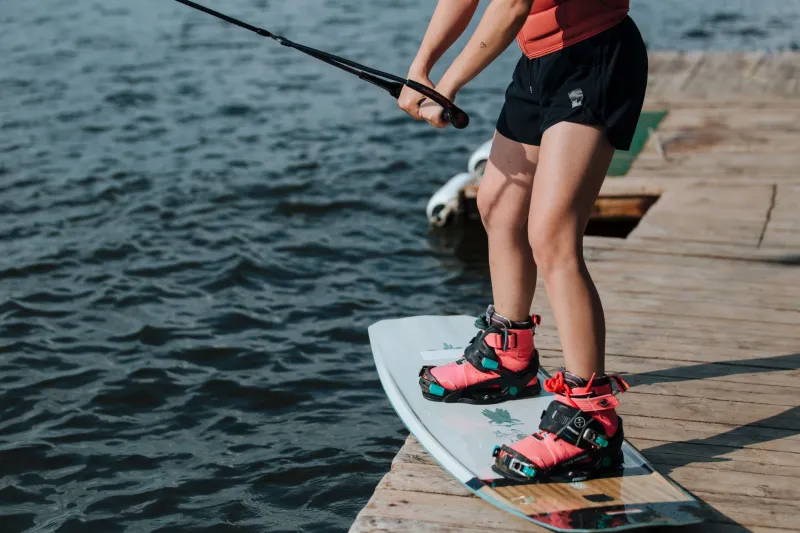
Before you get wet, give your kit a proper look. This takes about two minutes and saves a lot of frustrating sets.
-
Slide in properly. Loosen the bindings, push your foot all the way back until your heel is seated, then tighten from the bottom up. Do not yank the laces or straps like you are closing an overpacked suitcase.
-
Check heel lift. Stand up and try to lift your heels inside the boots. A tiny bit of movement is normal. A heel that rises like a lift door is not. If your heel lifts, the binding is too big, too loose, or the wrong shape for your foot.
-
Check the toes. Your toes should touch the end of the boot without being curled up like a clenched fist. If they are jammed, size up or try a different brand. If there is a finger's width of empty space, size down.
-
Flex and lean. With the board flat, bend your knees and rock gently from heel edge to toe edge. You want support around the ankle without a vice-like pinch. If you can feel a pressure point on the top of your foot or either side of your ankle, sort it now.
-
Do a circulation check. Wiggle your toes. If you cannot feel them, or if your foot is already going numb, loosen something. Cold UK water will only make that worse.
If you are wearing wetsuit socks or drysuit booties, do the test with them on. A binding that fits in bare feet can become a different animal once you add neoprene.
The signs it is the kit, not you
Beginners tend to blame themselves first. That is admirable, but it is not always accurate. Watch for these clues:
- The board wanders on flat water even when you are trying to hold a straight line.
- Your heel lifts on toeside carves, especially when you are tired.
- You finish a set with sore shins, cramped arches or a bruise on the top of your foot.
- Handle passes feel late and scrappy because your body is shifting inside the boots.
- You can hold an edge on the dock or in your head, but it disappears on the water.
- Your front foot feels fine and your back foot feels like it is in a different binding altogether. That is common with hire kit.
None of these prove the bindings are wrong. They do mean the fit is worth checking before you book another lesson to fix a problem that might live in the boot.
What to ask when you are hiring kit
Cable parks and hire centres do their best, but bindings get swapped, stretched and abused. Speak up at the counter. Ask for your usual shoe size and mention whether you are wearing socks. Ask if the bindings are adjustable and whether you can try two sizes on the dock before your session. A good centre would rather spend three minutes finding a better fit than watch you struggle for two hours.
If the hire board has fixed-size bindings and none of them feel right, ask if another board is available. It is not a fussy request. It is the same as asking for a different-sized bike helmet.
Snug, not strangled
The goal is a firm handshake, not a bear hug. Your heel should stay put. Your ankle should be able to flex enough to absorb landings and set an edge. Your toes should not be curled or numb. If you can slide your foot out with the bindings done up, they are too loose. If you need a helper and a small prayer to get out, they are too tight.
Do the dock test again after your first set. Neoprene changes shape when wet, and straps settle. A binding that felt perfect on dry land can loosen once you have had a few falls. A quick tweak between sets is cheaper than a whole session spent fighting your equipment.
Your wake jumps will not fix themselves overnight. But if your feet are moving around inside your boots, you are making the job much harder than it needs to be. Start with the fit. Then get back to the fun part: riding, falling, and eventually sticking that jump.