Inspect, Size, Then Shake Hands: Buying a Secondhand Wakeboard in the UK
Buying your first wakeboard is one of those small rites of passage. For a while, hire kit has been doing you a favour: it is generic, tough, and somebody else worries about the dings. Then you start noticing that the board under your feet feels like a bus, or the bindings have all the precision of a pair of old gardening shoes. You want your own setup. The secondhand market is where most UK riders start — and it is also where plenty of them accidentally buy twice.
This is not a warning to avoid used gear. A sound secondhand board is probably the best value in wakeboarding. The trick is knowing which boards are sound, which are merely cheap, and which will fight your progression for the next six months.
Start With Your Weight, Not the Graphics
Wakeboards are sized primarily by rider weight, not height, and not by whatever colour scheme looks fastest on Marketplace. Every manufacturer publishes a weight range for each length, and those charts are the first thing to check. As a rough UK beginner guide, lighter riders often sit around 130–134cm, mid-weight riders around 135–139cm, and heavier riders at 140cm and up. But treat those as signposts, not scripture: a cable-focused board, a boat board, and a park board can all behave differently at the same length.
If you are mostly riding cable, tell sellers that. If you are mostly behind a boat, say so. A board that is too small will feel twitchy and punish your landings; one that is too big can feel sluggish and hard to load. Neither is a bargain at any price if it is the wrong tool for your weight and the water you actually ride.
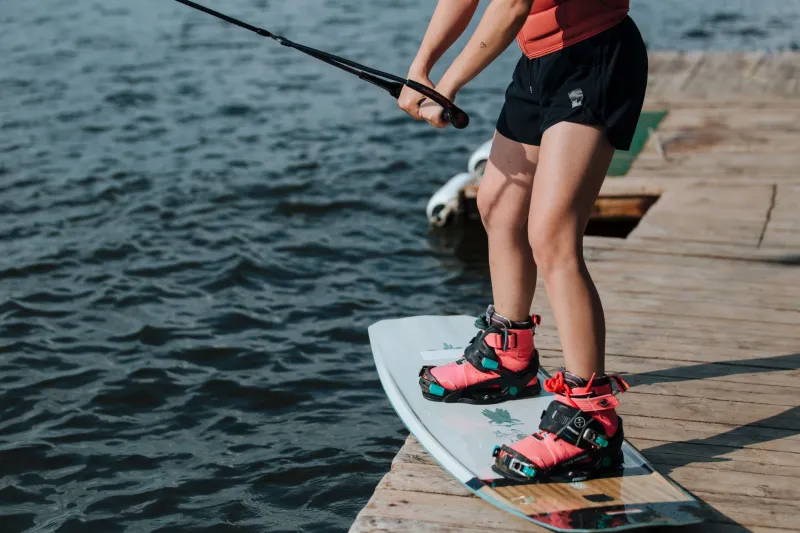
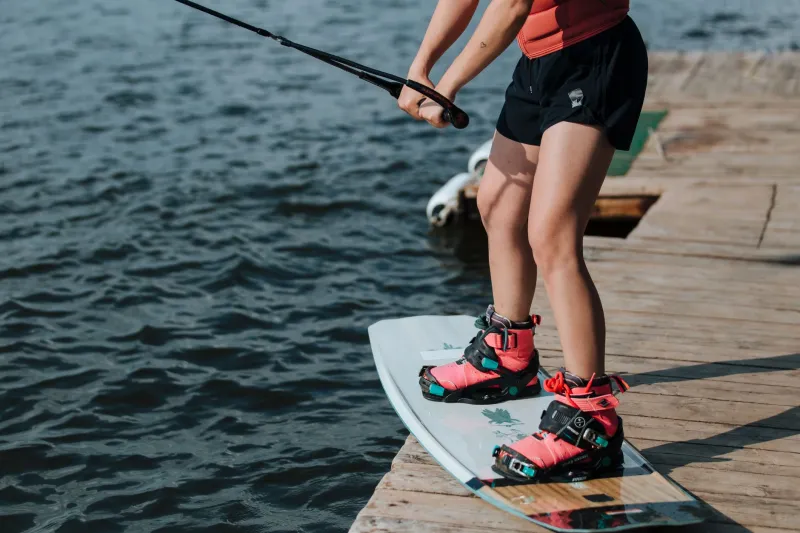
Bindings matter just as much. They should fit your UK shoe size without your toes curling or your heel lifting. A board with cheap bindings that fit is better than a lovely deck with bindings two sizes out. You can always upgrade bindings later, but you cannot shrink a board.
Where UK Riders Actually Find Used Gear
The obvious places are Facebook Marketplace, Gumtree, and eBay UK. They work, but they reward patience. The better finds often come from cable park noticeboards, club Facebook groups, and the end-of-season clear-outs at local shops and centres. Ask your local cable park whether they sell ex-hire or ex-demo kit. Ask in rider groups before you ask a stranger online. A board that has been used at a club is not necessarily bad — at least it has been used properly and looked after by people who know what a damaged edge looks like.
Be wary of listings with one dim photo and the phrase 'rarely used'. Rarely used can mean stored wet in a shed for four years. Ask for daylight photos of both sides of the deck, the base, the edges, and every insert. Ask for a close-up of the binding mounting areas. If the seller cannot be bothered to take them, you cannot be bothered to drive across three counties.
The Ten-Minute Deck Inspection
When you get the board in your hands, slow down. Run your fingers around the whole edge. Small cosmetic scuffs are fine. What you are looking for is damage that has gone through the outer layer and into the core. A gouge that exposes the core is a walk-away unless you are confident about repair and the price reflects it.
Look closely around the inserts — the threaded metal points where the bindings bolt in. Hairline cracks in the top sheet around those areas are common, but if the board feels soft or crunchy there, or if water staining has crept in, leave it. A light knuckle tap across the deck can help: a crisp sound is reassuring, a dull thud around one area is worth investigating. It is not a laboratory test, but it is better than ignoring the question.
Check the rocker by sighting down the board from the tip. The curve should be smooth and symmetrical, not flattened in the middle or twisted to one side. Check the base for deep gouges that have gone through the base material. Check that every insert accepts a bolt by hand — do not force anything. A spinning insert is a mounting headache you do not need. And look at the binding area for cracks radiating out from the screw holes; that is where a hard landing can start a bigger problem.
Bindings: Bargain or False Economy?
Secondhand bindings can be excellent. They can also be the reason your first season on your own kit feels worse than hire gear. Check the straps for fraying, the stitching for splits, the ratchets for smooth movement, and the baseplate for cracks. Flex the bindings gently. Old plastic gets brittle, and brittle plastic does not forgive a clumsy edge catch.
Liners pack out over time, so a binding that felt snug for the original owner may feel vague for you. If the bindings are included and fit properly, brilliant. If they are a size out, factor in the cost of replacements before you agree a price. A £100 saving on a board that comes with worn-out bindings is not a saving; it is a deposit on a new pair.
Questions to Ask Before You Drive Anywhere
Ask why they are selling, how long they have owned the board, and whether it has been used at cable or behind a boat. Ask if it has been stored wet, repaired, or left in a hot car. Ask for the manufacturer's weight range if the sticker is still visible. Ask whether you can inspect before paying, and whether they will hold it while you travel. Do not send a deposit by bank transfer to someone you have never met. If a seller is evasive about close-up photos or basic history, thank them and move on.
Walk Away If…
You see cracks around the inserts, soft spots in the deck, delamination, exposed core, a twisted rocker, or inserts that spin. Walk away if the bindings are cracked or the seller will not confirm they fit. Walk away if the board is the wrong size for your weight just because it is cheap. And walk away if the price is close to new — at that point, buy new and get the warranty, the correct size, and the advice of a shop that knows what it is selling.
A good secondhand wakeboard should feel like a step forward: lighter, better sized, and more responsive than the hire kit you learned on. Take your time, inspect it properly, and buy for the rider you are becoming this season — not just for the bargain you spotted on a Tuesday night. The right used board is out there. The wrong one is cheaper, and it will cost you far more.