Season Three, Same Old Wipeout: A Four-Week Reset for Stalled Wake Jumps
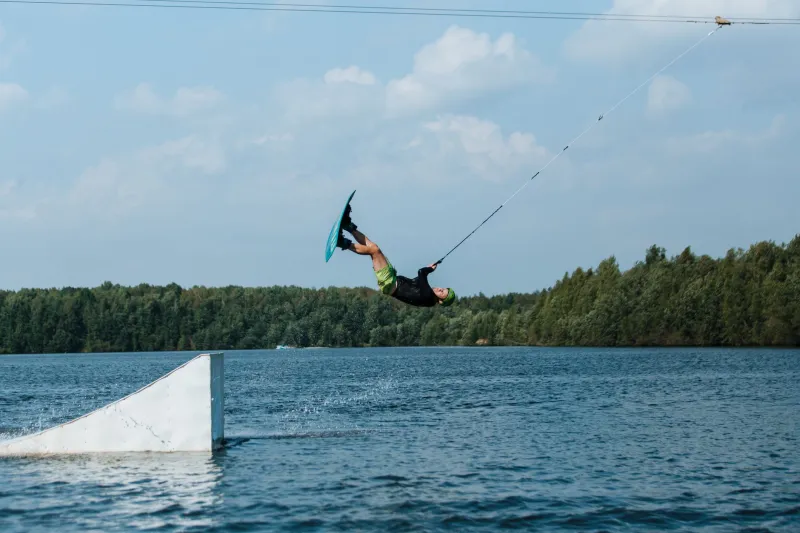
Season three has a reputation problem. You can book the same cable slot, own your own board and still spend most of a set doing the same nervous edge into the same half-hearted pop. The usual advice — ride more — sounds sensible until you realise you have been riding more for eighteen months. If the wake jump still is not clicking, the problem is rarely volume. It is usually what you are practising, how you are measuring it and whether your kit and body are giving you a fair chance.
First, separate a plateau from a bad month
A plateau is not one scrappy session in cold drizzle. It is a pattern: your clean landings have flatlined, your approach feels rushed and you cannot remember the last time a set had a clear focus. Before you rebuild anything, give the last six weeks an honest audit. UK wake life makes this harder than it sounds. Cable slots get cancelled, boat days are shared with friends and the water is rarely bath-warm. A run of poor sets may be scheduling noise rather than a genuine stall.
Still, if the pattern holds, stop treating 'ride more' as a plan. More sets of the same unclear jump will only groove the same mistake.
The five suspects worth checking
Most stalled wake jumps come back to one of five things.
Fear. You edge in hard, then stand tall or let the handle drift because you are bracing for the fall. That kills the pop before it starts.
Fitness. Wakeboarding is grip, core and legs. If your forearms are cooked by the second pass, your handle position will collapse.
Kit mismatch. A board that is too big, bindings that are too loose or a rope length that puts you in the wrong part of the wake can make a decent technique feel awful. Borrowed kit is fine for a taster; it is a poor long-term coach.
Poor feedback. If nobody films you and nobody gives you one clear cue, you are guessing. Guessing feels like practice but is not.
Too few quality sets. Ten rushed minutes at a cable park is not the same as a focused session with two priorities and a proper warm-up.
Pick the suspect that sounds most like you. The reset below assumes you can work on at least two of them.
Week one: audit, film and set a baseline
Do not change your technique yet. Spend one cable session and one boat session — or two cable sessions if that is your setup — gathering evidence.
For each session, take five wake jump attempts. Film from the side at roughly 45 degrees, ideally with the rider filling the frame from waist to board. Ask a friend to hold the phone steady rather than track you wildly. Review the footage at half speed and answer three prompts:
- Where does my edge start to load — before, at or after the wake?
- Is the handle close to my front hip through the pop, or has it drifted away?
- Do I land with bent knees and weight centred, or do I reach for the water?
Write down one sentence for each attempt. Then score the set with a simple landing rate: clean ride-aways divided by attempts. A clean ride-away means both feet on the board, handle controlled and you keep riding. Not every attempt needs to be a jump; count only deliberate wake jump attempts.
Week two: rebuild the approach
This week is about the bit before the pop. At the cable, use two flat-water laps at the start of every session. Edge out wide, hold a progressive edge back towards the kicker, then ride past without jumping. Count how many seconds you can hold the edge without adding a jerk. The aim is smooth pressure, not a sprint.
Then do three 'no-pop' kicker passes. Approach at your normal speed, compress slightly and let the kicker lift you without an extra yank. If you cannot ride away without popping, your approach is too rushed.
On the boat, replace full wake jumps with wake-to-wake edge drills. Cut out, hold the edge and ride through the wake without jumping. Focus on the handle staying near your lead hip. If you have a coach or experienced driver, ask them to watch your speed and rope length; a slightly shorter line can make the wake narrower and easier to read.
Week three: add pop and handle control
Now add the jump back in, but keep one variable. At the cable, do three sets of three kicker jumps with a single cue: handle to hip. No grabs, no spins, no extra speed. If the first two jumps are messy, stop jumping and go back to no-pop passes.
On the boat, try wake jumps with a shortened approach. Start closer to the wake so you cannot build a wild edge. The goal is a controlled pop, not maximum distance. Film two passes and review only for handle position and knee bend. Ignore the height for now.
Video prompts for this week:
- Does the handle stay close from load to landing?
- Do my knees stay bent in the air, or do I straighten and reach?
- Is my landing noise quiet, or is there a slap as the board hits flat?
Week four: pressure test and measure
Book two sessions with the same warm-up. Use a simple before-and-after scorecard: landing rate out of ten attempts, edge-hold count on flat water and a one-to-five self-rating for handle control. Compare week four with week one. You are not looking for a miracle. A jump from three clean landings in ten to five is progress. A steadier approach with the same landing rate is also progress.
What to do when the jump still is not clicking
Keep the protocol going for another four weeks, but change only one variable. If fear is the issue, spend a session on small kicker jumps and build confidence before height. If fitness is the issue, add two short off-water sessions: grip carries, split squats and dead bugs are enough. If the kit is the issue, test a different board or rope length before blaming your technique.
The plateau protocol is not glamorous. It is a way of turning 'I feel stuck' into a list of small, testable questions. Season three does not have to feel like season one. Sometimes it just needs fewer random sets and a clearer job for each one.